

 Current position > Product detail
『4 Water Flow Meter: Sourcing Four-Inch Commercial Utility Main Valve Spools』Related information(flow rotameter|digital flow meter|balo meter|hydraulic flow meter|volumetric meter|positive displacement meter|pitot tube flow meter|displacement meter|cfm meter|variable area flow meter|inline flow meter|differential pressure flow meter|calibrated flow meter|velocity meter|paddle wheel flow meter|oval gear flow meter|anemometer hvac|multiphase flow meter|doppler flow meter|thorpe tube flowmeter|heat flow meter)
4 Inch Water Flow Meter Sourcing: Four-Inch Commercial Utility Main Valve Spools
Quick Answer: A 4 inch water flow meter for a commercial utility main line usually means a DN100 electromagnetic flow meter with flanged ends. Four-inch commercial utility main valve spools need a meter body length that matches the spool gap and the flange pressure class. Send pipe size, pressure rating, flow range, and water quality data to Silver Automation Instruments for a direct price quote.
What a Four-Inch Commercial Utility Main Valve Spool Requires
Commercial utility water lines in apartment buildings, district cooling plants, and municipal booster stations often use 4 inch main valves. The valve spool is the short pipe section between flanges. It often holds a check valve, a strainer, or a flow meter. In practice, a 4 inch spool has an inside diameter close to 100 mm. So the flow meter must be DN100.
A four-inch commercial utility main valve spool is not always a simple pipe nipple. Many spools have butterfly valves and tapped pressure ports. The flow meter body length has to fit the space left between two flanges. Standard wafer meters fit tight gaps. Full-bore electromagnetic flow meters need more straight run but give stable readings.
Best 4 Inch Water Flow Meter Types for Utility Mains
Electromagnetic flow meters work best for clean water and raw water utility lines. A DN100 electromagnetic flow meter has no moving parts. It handles 0.2 to 10 meters per second flow velocity. For commercial utility mains, this covers a wide range from about 5 m3/h to 280 m3/h depending on velocity.
Ultrasonic clamp-on meters can be installed without cutting the spool. But four-inch commercial utility valve spools often have limited pipe access. In practice, clamp-on sensors need straight pipe and clean outside wall. They also need stable pipe wall thickness. For a permanent billing or district metering job, an inline electromagnetic flow meter is more repeatable.
Mechanical turbine meters are cheaper. But they stop working if the water has sand, rust, or air slugs. Most engineers skip turbine meters on commercial mains because maintenance cost rises fast. Electromagnetic flow meters need a minimum conductivity of 20 µS/cm for stable readings. Potable water and raw water almost always exceed this.
Data to Send for a DN100 Water Flow Meter Quote
Do not send a vague inquiry. A vague inquiry like just a 4 inch flow meter price slows down the quote. Silver Automation Instruments needs five data points. Pipe size: DN100 or 4 inch. Pressure rating: PN10, PN16, or ANSI 150. Flow range: minimum, normal, and maximum in m3/h or gpm. Water quality: potable, raw, chilled, or wastewater. Output: 4-20 mA, pulse, RS485, or HART. Also include temperature in Celsius or Fahrenheit.
Here is a concrete example. Last year a facility manager in Manila asked for a 4 inch water flow meter for a commercial building main. He sent normal flow 60 m3/h, pressure PN16, temperature 25 Celsius, potable water, and 4-20 mA HART output. We quoted a DN100 electromagnetic flow meter with PTFE liner and stainless steel electrodes. The total lead time was 12 days.
Why Valve Spool Geometry Affects Flow Meter Accuracy
Flow meters need stable velocity profiles. A four-inch commercial utility main valve spool often places a butterfly valve right before the meter. This creates swirl. An electromagnetic flow meter usually needs 5D upstream and 2D downstream. For DN100, that means 500 mm of straight pipe before the meter and 200 mm after the meter.
If the spool is short, use a flow conditioner or move the meter to a longer pipe section. Do not install the meter right after a partially closed valve. Air pockets and swirl cause reading error
Silver Automation Instruments 4 Inch Water Flow Meter Models
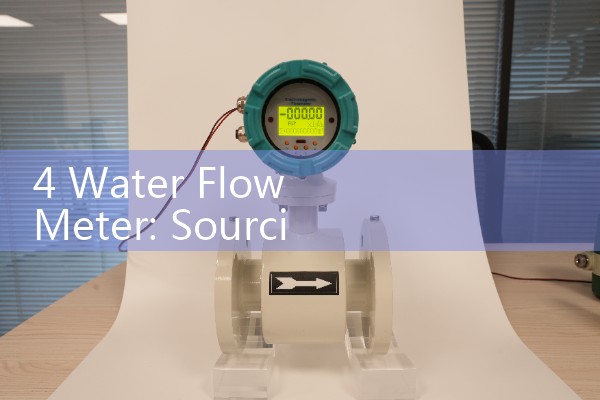
Silver Automation Instruments supplies a DN100 electromagnetic flow meter suitable for commercial utility main valve spools. The standard model uses a carbon steel body with flanged ends. Liner options include PTFE, hard rubber, and polyurethane. Electrode options include 316L stainless steel, Hastelloy, and titanium.
For potable water mains, hard rubber liner and 316L electrodes are enough. For chilled water, PTFE liner works better because of temperature swings. For raw water with sand, use polyurethane liner and tungsten carbide electrodes if abrasive wear is expected.
Pressure ratings cover PN10, PN16, and ANSI 150. Process temperature range is 0 to 80 Celsius for rubber liner and -20 to 120 Celsius for PTFE. Accuracy is 0.5 percent of reading for velocities above 0.5 m/s. Output options include 4-20 mA, pulse, RS485 Modbus, and HART.
Four-Inch Valve Spool Sourcing Points That Save Money
When you source a four-inch commercial utility main valve spool, specify the flange standard early. DIN PN16 and ANSI 150 have different bolt circles. Some importers order a DN100 meter with DIN flanges and then find the site uses ANSI flanges. This causes rework and extra gaskets.
Check the face-to-face length. Standard ISO 13359 length for a DN100 electromagnetic flow meter is 250 mm. Wafer styles are shorter. Flanged styles need gasket space. If the existing spool has a fixed gap, tell the supplier the gap before the quote. Silver Automation Instruments can adjust the meter body length for many orders.
Also confirm the cable length. Utility vaults and meter pits need 10 to 30 meters of signal cable. Specify remote or compact electronics. Compact meters are easier to install. Remote meters are better for flooded or hot utility vaults.
FAQ: 4 Inch Water Flow Meter for Commercial Utility Valve Spools
Question 1: Can I install a 4 inch water flow meter in a vertical utility pipe?
Yes. Electromagnetic flow meters work in vertical pipes if flow goes upward. Upward flow keeps the pipe full. Do not install in downward flow because the pipe may drain and air will collect.
Question 2: What flow range can a DN100 electromagnetic flow meter measure?
For a DN100 electromagnetic flow meter, the practical range is about 5 to 280 cubic meters per hour. The low end depends on velocity 0.2 m/s. The high end depends on velocity 10 m/s. Send your normal and maximum flow to get a better match.
Question 3: Do four-inch commercial utility main valve spools need a flow conditioner?
Not always. If the spool has 5D straight pipe before the meter, a flow conditioner is not needed. If the valve sits close to the meter, a flow conditioner can reduce swirl and improve accuracy.
Question 4: What is the typical lead time for a 4 inch water flow meter?
Standard DN100 electromagnetic flow meters ship in 7 to 15 days. Special liners or remote cable lengths add 5 to 10 days. Silver Automation Instruments keeps common PN16 hard rubber models in production slots.
Question 5: Which output should I choose for a commercial utility meter?
4-20 mA plus pulse is the most common for local control panels. Modbus RS485 works well for building management systems. HART is useful if the site already uses HART handheld configurators.
Send your pressure in bar, temperature in Celsius, pipe size DN100 or 4 inch, and normal flow range to Silver Automation Instruments for a same-day quote. Tel: +86-25-68650347. Whatsapp: +86-25-52155837. WeChat: +86 15365082610.