

 Current position > Product detail
『Oscillating Piston Flow Meter: Volumetric Positive Displacement Fluid Senses』Related information(flow rotameter|digital flow meter|balo meter|hydraulic flow meter|volumetric meter|positive displacement meter|pitot tube flow meter|displacement meter|cfm meter|variable area flow meter|inline flow meter|differential pressure flow meter|calibrated flow meter|velocity meter|paddle wheel flow meter|oval gear flow meter|anemometer hvac|multiphase flow meter|doppler flow meter|thorpe tube flowmeter|heat flow meter)
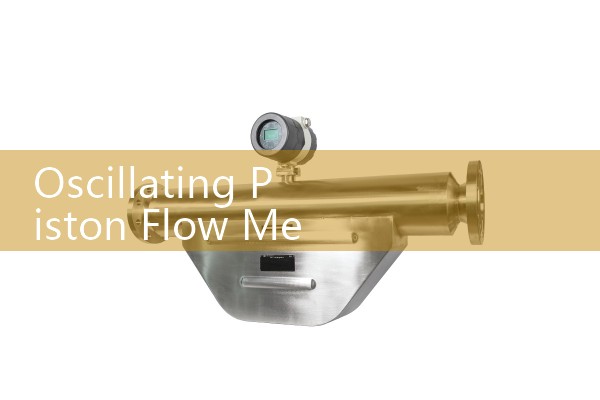
Oscillating Piston Flow Meter: Volumetric Positive Displacement Fluid Sensing for Low Flow Dosing and Batch Control
Quick Answer: An oscillating piston flow meter is a volumetric positive displacement device that senses fluid volume directly by trapping fixed chamber volumes. It works well for low flow dosing, batch filling, and viscous liquids such as chemicals, oils, and syrups. Accuracy holds at 0.5 L/h because each piston cycle equals one discrete volume.
Silver Instruments supplies oscillating piston flow meters in DN15 to DN50 sizes. These units are common on chemical injection skids, food filling lines, and utility metering panels across Southeast Asia, Australia, the Middle East, and Latin America.
How the Volumetric Positive Displacement Principle Works
A piston moves inside a circular chamber. Liquid enters the inlet port and fills a known volume between the piston and the chamber wall. The piston rotates and transfers that volume to the outlet port. Each rotation releases a fixed amount of fluid. The meter counts these rotations with a magnetic pickup or reed switch.
This method is direct. The meter does not infer flow from velocity or pressure drop. It counts volume directly. That is why positive displacement meters hold calibration better on short batches and low flow rates.
In practice most engineers choose this meter when a magnetic flow meter cannot read low conductivity liquids. This applies to diesel, deionized water, or solvent type fluids. An electromagnetic flow meter needs a minimum conductivity. An oscillating piston meter does not care about conductivity. It only cares about liquid compatibility.
Fluid Types and Compatibility
Oscillating piston flow meters suit clean liquids with viscosity from 1 cP up to about 100000 cP. They work with diesel, light oils, glycol, inks, paints, solvents, alkaline cleaners, and liquid food products.
Here is the thing. The meter has tight clearances. Particles and solids can jam the piston. If your fluid has grit or fibres, put a strainer upstream. We have seen this on customer sites many times. A 100 micron Y strainer can prevent most failures in paint and wastewater chemical lines.
Seal and body material selection matters. For solvents choose 316L stainless steel body with PTFE seals. For water based chemicals choose PPS or aluminium body with EPDM or FKM seals. For food grade filling choose stainless steel with FDA approved PEEK internals where possible.
Accuracy, Pressure Drop, and Output Signals
A typical Silver Instruments oscillating piston flow meter has an accuracy of plus or minus 0.2 percent of reading over the upper flow range. At the lower end it may shift to plus or minus 0.5 percent. The repeatability is often plus or minus 0.03 percent. This repeatability is what matters for batching and filling.
Pressure drop depends on viscosity and flow rate. A DN15 meter at 50 L/h with 100 cP liquid can have a pressure drop around 0.3 bar. At 10000 cP the pressure drop can increase to 1 bar or more. We ask for viscosity because many users overlook this point.
Output options include pulse, 4-20 mA HART, and RS485 Modbus. For local batch control use the pulse output. For DCS and PLC integration use 4-20 mA HART. Some models include a built in batch display. Add a PT100 if you need temperature compensation for fuel oil or food oil measurement.
Common Applications We Quote
A paint manufacturer in Vietnam needed a meter for additive dosing. The flow range was 2 to 20 L/h. The additive had viscosity around 500 cP. A turbine meter drifted after a few months because the low flow was outside the linear range. We supplied a DN15 oscillating piston meter with PPS body and pulse output. The batch accuracy improved from 1.5 percent to 0.3 percent.
A desalination plant in Saudi Arabia used the meter for antiscalant injection. The plant runs 24 hours per day. The meter runs at 1.5 L/h against 4 bar pressure. The 4-20 mA HART output connects to the plant SCADA. Since installation the plant has replaced one set of seals after 18 months. That is normal wear.
An Australian food producer fills 500 mL sauce containers on a rotary line. They use a DN15 stainless steel oscillating piston meter with pulse output. The pulse output triggers a valve at 0.5 L. Fill volume variation stayed under 1 mL per container. This took months of manual weighing off the line.
A chemical distributor in South Africa blends solvent and resin. The formula requires
Oscillating Piston Flow Meter vs Oval Gear Flow Meter
Both are positive displacement meters. Both handle low flow and viscous liquids. The difference comes from internal movement and pulse resolution. An oval gear meter has two rotating oval gears. An oscillating piston meter has one piston that oscillates inside a circular chamber. The oscillating piston often has fewer moving parts and lower leakage at very low flow rates. The oval gear meter can handle slightly higher viscosity because the gears are robust. The piston meter is usually more compact for DN4 to DN25 lines.
For diesel transfer on small day tanks many engineers choose oval gear meters. For chemical dosing and batch filling under 100 L/h the oscillating piston meter is often a better fit.
Installation Notes That Prevent Startup Problems
Install the meter in a horizontal or vertical line as long as the piston stays full. The line must be full at all times. Do not allow air slugs. Air is not a liquid and the meter will count it as volume. This is especially important for suction side usage.
Most engineers skip this part. A positive displacement meter needs a stable back pressure. Without back pressure the piston can freewheel at the end of a batch. Put a back pressure valve or maintain at least 0.2 bar downstream. On filling lines the nozzle itself can create back pressure. On open discharge lines you need a back pressure valve.
Install a 100 micron strainer upstream. Check the strainer every month for the first quarter. Clean it sooner if the flow rate drops. Flush the line before startup. Welding slag, pipe tape, and thread sealant are the most common causes of piston lock.
Pricing Factors for a Quote
Price changes with body material, seals, size, and output. A PPS body DN15 meter with pulse output costs less than a 316L stainless steel DN25 meter with 4-20 mA HART and a local display. Explosion proof versions for ATEX Zone 1 or IECEx add cost. Food grade polished stainless steel and FDA approved seals add cost.
Send us your fluid name, viscosity in cP, pipe size in DN, flow range in L/h, and operating pressure in bar. Also tell us the output signal you need. Our engineers will return a model selection and price. Call Silver Instruments at Tel +86-25-68650347 or WhatsApp +86-25-52155837. WeChat is +86 15365082610.
FAQ: Five Questions Engineers Ask Before Buying
Can an oscillating piston flow meter handle water with no additives?
Yes. Clean water is fine. The meter does not need conductivity. Deionized water and reverse osmosis water are common applications. Protect the internals from scale build up with strainer and flushing.
What is the smallest flow rate the meter can measure?
A DN4 or DN15 model can measure from 0.2 L/h or 0.5 L/h depending on viscosity. For reliable batch accuracy we recommend staying above 10 percent of the full scale range. Low flow start up depends on liquid viscosity and back pressure.
Can the meter be used for diesel or fuel oil?
Yes. Use aluminium or stainless steel body with FKM or PTFE seals. Diesel and light fuel oils work well. Add a PT100 if you need temperature correction for mass or energy readings. For custody transfer check local metrology requirements.
Can I install the meter outdoors?
Yes with safeguards. Protect the electronics from direct sun and flooding. Use an integral display with IP66 or IP67 housing. For ATEX Zone 1 areas request explosion proof certification. Avoid installations where temperature cycles create condensation inside the display if the cover is opened often.
What causes low batch accuracy at startup?
Air in the line is the top cause. The second cause is missing back pressure. The third cause is a partially blocked strainer that drops pressure and creates cavitation. Flush the line, maintain back pressure, and check the strainer before blaming the meter.
Silver Instruments supplies oscillating piston flow meters for chemical dosing, food filling, fuel oil, and utility water metering. Send your pressure in bar, temperature in °C, pipe size in DN, and flow range. We will reply with a recommended model, lead time, and price.