

 Current position > Product detail
『3-4 inch NPT Flow Meter: Sizing Middle-Tier Utility Processing Pipelines』Related information(flow rotameter|digital flow meter|balo meter|hydraulic flow meter|volumetric meter|positive displacement meter|pitot tube flow meter|displacement meter|cfm meter|variable area flow meter|inline flow meter|differential pressure flow meter|calibrated flow meter|velocity meter|paddle wheel flow meter|oval gear flow meter|anemometer hvac|multiphase flow meter|doppler flow meter|thorpe tube flowmeter|heat flow meter)
3-4 inch NPT Flow Meter: Sizing Middle-Tier Utility Processing Pipelines
Quick Answer: For 3 inch and 4 inch NPT utility pipelines, match the flow meter type to the fluid. Electromagnetic flow meters handle water, wastewater, and conductive chemicals. Vortex flow meters handle steam and compressed air. Send your fluid type, pipe size, pressure, temperature, and flow range to Silver Instruments for a direct quote.
We see many middle tier processing plants in Southeast Asia, Latin America, and the Middle East run 3 inch and 4 inch utility lines. These lines serve cooling water, boiler feed, clean in place, compressed air, and steam. The pipe size is moderate. The flow rate is high enough to need a reliable meter. But the budget is usually tighter than a large refinery project. That is where sizing gets practical.
Here is the thing. A 3 inch NPT meter is not just a smaller version of a 4 inch flanged meter. The thread connection changes installation limits. The flow velocity changes accuracy. And the wrong meter type can fail within months on a utility line that runs 24 hours a day.
First Decision: What Is Flowing Through the Pipe
Most utility lines move water, wastewater, steam, or compressed air. For water and wastewater, an electromagnetic flow meter is the default choice. It has no moving parts. It works as long as the liquid conductivity is above 5 µS/cm. That covers raw water, treated effluent, cooling water, and many chemical dosing solutions.
For steam and compressed air, a vortex flow meter is the practical choice. It tolerates high temperature and has no small gaps that clog. Some engineers also use a thermal mass flow meter for compressed air and utility gas lines. A thermal mass flow meter gives direct mass flow, so you do not need separate pressure and temperature compensation.
If the fluid is non-conductive like diesel or light oil, skip the electromagnetic meter. Use an oval gear flow meter or a Coriolis mass flow meter. But on most middle tier utility processing pipelines, water and steam are the main fluids.
DN80 and DN100 Sizing Numbers That Matter
A 3 inch NPT line usually matches DN80. Schedule 40 pipe has an internal diameter of 77.9 mm. At 1 m/s, the flow rate is about 17.2 m3/h. At 3 m/s, it is about 51.6 m3/h. For utility water, target 1.5 to 3 m/s. That gives a stable reading without wasting pump energy.
A 4 inch NPT line usually matches DN100. Schedule 40 pipe has an internal diameter of 102.3 mm. At 1.5 m/s, the flow rate is about 44.4 m3/h. At 3 m/s, it is about 88.8 m3/h. This range works well for cooling water, wash water, and treated effluent.
For steam, sizing is different. You must use the actual velocity at operating pressure and temperature. Do not size a vortex meter on standard cubic meters per hour alone. A saturated steam line at 8 barg has a much smaller actual volume flow than the same mass flow at 3 barg. Send the operating pressure and temperature with your inquiry. Otherwise the meter will be oversized or undersized.
NPT Connections and Installation Limits
NPT threads seal on the threads themselves. Use a thread sealant that matches the fluid and temperature. For water and air, PTFE tape is common. For steam above 150°C, use a graphite paste and a tape rated for that temperature. We have seen customer sites in Oceania use standard PTFE tape on steam lines and then deal with small leaks after a few thermal cycles.
3 inch and 4 inch NPT joints are harder to assemble than smaller threads. The torque required is high. Use a proper pipe wrench a
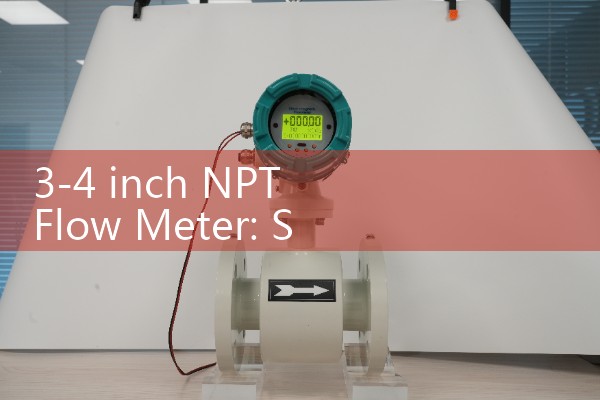
Threaded connections suit utility lines up to about 150 psi at ambient temperature. For higher pressure or repeated thermal cycling, flanged connections are safer. In practice, most engineers skip this part. They size the meter body but forget the threaded joint can become the weak point. Check the connection rating before you order.
Silver Instruments Options for 3 and 4 Inch NPT Lines
For water and wastewater, Silver Instruments supplies electromagnetic flow meters in DN80 and DN100 with NPT end connections. Specify 316L electrodes and a PTFE liner. Output can be 4-20 mA HART. Accuracy is plus or minus 0.5 percent of reading. Minimum fluid conductivity is 5 µS/cm. These meters work for cooling water, raw water, treated effluent, and some chemical dosing streams.
For steam and compressed air, Silver Instruments supplies vortex flow meters. You can add an integral pressure sensor and temperature sensor for steam mass flow. Accuracy is plus or minus 1.0 percent for liquids and 1.5 percent for gas and steam. Process temperature can reach 250°C. Output options include 4-20 mA HART and MODBUS.
For compressed air and utility gas lines, Silver Instruments supplies thermal mass flow meters. These are direct mass flow devices. No separate pressure or temperature compensation is needed. Accuracy is plus or minus 1.5 percent of reading. They are good for leak detection and energy management in aeration systems.
Sizing Example from a Southeast Asia Water Treatment Plant
A water treatment plant in Malaysia ran a 4 inch cooling water line at 2.3 m/s. That gave 68 m3/h on a DN100 electromagnetic flow meter from Silver Automation Instruments. The old meter was undersized and caused a 0.8 bar pressure drop. After replacing it with a 4 inch NPT meter, pump energy dropped by 9 percent. The meter paid for itself in 14 months.
Another customer in Vietnam asked about a 3 inch NPT line carrying CIP chemical solution. The conductivity was 11 mS/cm. We supplied an electromagnetic flow meter with a PTFE liner and 316L electrodes. The flow range was 5 to 25 m3/h. No moving parts meant no clogging. That meter has been running for over two years without a service call.
NPT Flow Meter Sizing in 5 Questions
What is the best flow meter for a 3 inch water line?
Use an electromagnetic flow meter if the water conductivity is above 5 µS/cm. Specify DN80 with NPT threads and a 4-20 mA HART output.
Can I use a vortex flow meter on a 4 inch NPT steam line?
Yes. But size the meter using actual pressure and temperature. Add an integral pressure sensor and temperature sensor for steam mass flow.
What flow range should I design for on a 4 inch utility water pipe?
A DN100 line at 1.5 to 3 m/s covers about 44 to 89 m3/h. This range keeps pressure loss low and accuracy stable.
Are NPT connections reliable on 3 and 4 inch flow meters?
They can be reliable up to about 150 psi at ambient temperature. Use the correct thread sealant and do not over-tighten. For steam or thermal cycling, flanged connections are stronger.
How do I get a quote for a 3 or 4 inch NPT flow meter?
Send your fluid type, pipe size, operating pressure, temperature, and flow range to Silver Instruments. Tel: +86-25-68650347. Whatsapp: +86-25-52155837. WeChat: +86 15365082610.