


『Wind pressure flowmeter』Related information(flow rotameter|digital flow meter|balo meter|hydraulic flow meter|volumetric meter|positive displacement meter|pitot tube flow meter|displacement meter|cfm meter|variable area flow meter|inline flow meter|differential pressure flow meter|calibrated flow meter|velocity meter|paddle wheel flow meter|oval gear flow meter|anemometer hvac|multiphase flow meter|doppler flow meter|thorpe tube flowmeter|heat flow meter)

1. Pipeline flowmeter
2. How to calculate the air flow rate of blast furnace blower
There are three mainstream methods for calculating the air flow rate of blast furnace blower: formula calculation, instrument measurement, and characteristic simulation curve matching. The core revolves around three dimensions: fan operating parameters, blast furnace smelting requirements, and on-site pipeline conditions. Corresponding methods can be selected according to actual scenarios. 1. The formula calculation method is divided into two typical application scenarios: • Theoretical design air flow calculation: Based on the oxygen balance and material balance of blast furnace smelting, the core formula is: $Q ₀ $(m ³/min)=$[22.4 × (C/12+0.375Si/28+0.25Mn/55+0.75P/31+0.5S/32) × 1000 × η]/0.21 $, where $C, Si, Mn, P, S $are the amount of each element introduced per ton of pig iron (unit: kg/t), $η $is the blast furnace smelting operation rate, and 0.21 is the proportion of atmospheric oxygen volume. The actual operating air volume needs to be adjusted based on air temperature and oxygen enrichment rate: $Q_ {actual}=Q ₀ × (0.21/(0.21+ω)) × (273+t ₀)/(273+t ₁) $, where $ω $is the oxygen enrichment rate (%), $t ₀ $is the standard reference temperature (20 ℃), and $t ₁ $is the actual inlet air temperature (℃). Reverse calculation of air volume based on fan shaft power, full wind pressure, and efficiency reserve rate, with the formula: $Q=(1000 × N × η _ {total})/(ρ × H) $, where $N $is the fan shaft power (kW), $η _ {total} $is the fan total efficiency (ranging from 0.6 to 0.85, depending on the model), $ρ $is the intake air density (kg/m ³, taken as 1.293 under standard conditions), and $H $is the fan full wind pressure
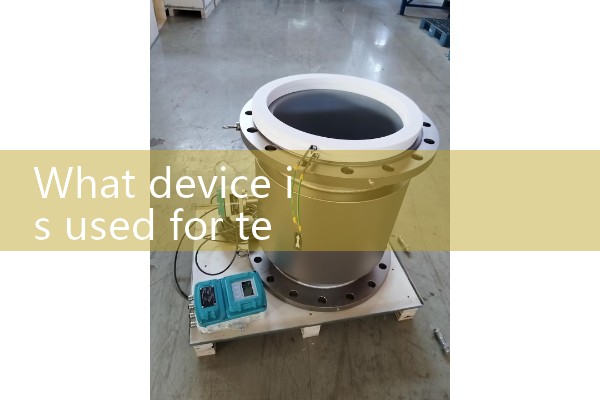
2. Instrument measurement method (preferred for on-site precise measurement) is currently the most commonly used precise measurement method in industrial sites. The mainstream solutions include: • Pitot tube speed measurement method: a pitot tube needs to be installed on the straight pipe section at the outlet of the fan (the length of the straight pipe section is ≥ 5 times the inner diameter of the pipeline), and the airflow dynamic pressure $P_d=0.5 × ρ × v ² $is measured. The airflow velocity $v=√ (2Pd_d/ρ) $is calculated, and the final air volume $Q=v × A $($A $is the cross-sectional area of the pipeline, $A=π D ²/4 $, $D $is the inner diameter of the pipeline). • Standard flow meter method: using calibrated orifice flow meters, vortex flow meters, Venturi flow meters, etc., the air volume can be directly read or calculated through the built-in algorithm of the instrument, with a measurement accuracy of ± 0.5%.
3. Characteristic curve matching method relies on the official operating characteristic curve provided by the fan manufacturer (the horizontal axis is the air volume, and the vertical axis includes full wind pressure, shaft power, and efficiency), combined with on-site measured pipe network resistance and fan operating speed (variable frequency fans need to match the corresponding speed correction curve), to match the actual air volume under the corresponding operating conditions on the curve, which is often used for
 Hot Blog
 Related AD