

『Vegetable Oil Flow Meter DN100 Refinery Fractionation System Sizing』Related information(flow rotameter|digital flow meter|balo meter|hydraulic flow meter|volumetric meter|positive displacement meter|pitot tube flow meter|displacement meter|cfm meter|variable area flow meter|inline flow meter|differential pressure flow meter|calibrated flow meter|velocity meter|paddle wheel flow meter|oval gear flow meter|anemometer hvac|multiphase flow meter|doppler flow meter|thorpe tube flowmeter|heat flow meter)
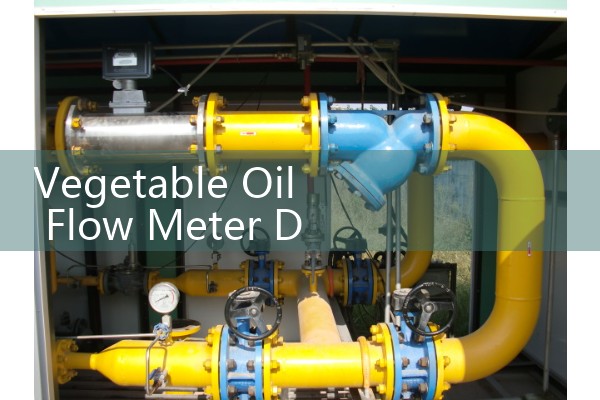
Vegetable Oil Flow Meter DN100 for Refinery Fractionation System Sizing
Quick Answer: For a vegetable oil refinery fractionation system, a DN100 flow meter handles typical flow rates between 50 m³/h and 120 m³/h depending on line pressure and oil temperature. Silver Instruments recommends a positive displacement or Coriolis mass flow meter for edible oil fractionation because these technologies maintain accuracy even when viscosity changes from 40 cP at 40°C to 8 cP at 100°C. Send us your exact flow range (kg/h or m³/h), process temperature, and pipe schedule and we will return a sized meter model within one working day.
Vegetable oil fractionation splits crude palm oil, palm kernel oil, or coconut oil into stearin and olein fractions. A DN100 line often sits on the main crystallizer feed or the hot oil transfer header. Meter sizing in this service is not a simple pipe diameter match. Process engineers at refineries in Indonesia, Malaysia, and Thailand have told us the same thing many times. If the meter is sized based on the nominal pipe size alone, you get poor turndown during winterization steps or high pressure drop at the hot filtration stage.
Why DN100 is Common in Edible Oil Fractionation
Most mid-size physical refineries run a 4-inch (DN100) main process line for the fractionation section. The pipe diameter balances heat loss, pumping cost, and crystallization velocity. A typical dryer or bleacher outlet at 100 m³/h of palm oil fits well inside a DN100 schedule 40 pipe. When oil temperature sits at 70 °C to 80 °C right before the chillers, inline density hovers around 860 kg/m³ to 880 kg/m³. At these conditions, a DN100 flow meter with full bore design passes roughly 95 m³/h without creating a velocity above 3.2 m/s. That is important. Too much shear breaks crystal nuclei and worsens the filtration yield. In practice, most fractionation plants limit the line velocity to 2.5–3.5 m/s inside the crystallizer feed circuit. A DN100 meter gives enough cross-section to stay in that window.
Flow Meter Technology Choices for Vegetable Oil Fractionation
Here is the thing. Positive displacement meters and Coriolis meters are the two main workhorses we supply for this job. Oval gear flow meters work very well on clean, filtered vegetable oil at stable temperature. But fractionation systems have a wide temperature swing. The oil leaves the heat exchanger at 70 °C, cools to 18 °C in stages, and may return at 10 °C after winterization. At 18 °C palm olein viscosity climbs above 50 cP. An oval gear meter with standard PPS gears and stainless steel bearings handles this nicely. We usually quote an oval gear flow meter with a DN100 size, cast steel housing, and PTFE seals for operating temperatures from 10 °C to 120 °C. Accuracy stays within ±0.5% of reading across the 3:1 turndown. A paint manufacturer in Vietnam runs exactly this setup on their palm stearin transfer line and checks calibration once a year. The meter has not drifted more than 0.2% in three seasons.
When the refinery needs mass balance data or density trending, a Coriolis mass flow meter makes more sense. A DN100 Coriolis meter can flow up to 120,000 kg/h of vegetable oil. The secondary output, density at line conditions, helps the control room detect phase changes during crystallization. Silver Instruments can supply a DN80 or DN100 Coriolis meter with 316L stainless steel measuring tubes, suitable for food grade oil. The pressure drop through a straight tube Coriolis meter at 100 m³/h is roughly 0.3 bar to 0.6 bar depending on the model. That number matters for the pump sizing. Most engineers skip this part, but we have seen suction cavitation problems on several sites in Latin America because the meter pressure loss was not added to the total dynamic head calculation. Do not skip that.
Magnetic and Ultrasonic Meters in Vegetable Oil Service
We get asked about electromagnetic flow meters for vegetable oil almost every month. Vegetable oil is not conductive. Cooking oil has a conductivity below 0.1 µS/cm. An electromagnetic flow meter needs at least 5 µS/cm to work reliably. We do not recommend it for pure oil. Some plants try to use clamp-on ultrasonic flow meters on DN100 carbon steel pipes. The issue is the sound speed drift with temperature and the pipe wall signal loss due to heavy schedule 40 or 80
Sizing Data You Need to Send
Most suppliers give a generic quotation with a model number and a price. That does not help you when the meter arrives and the flanges are PN16 but your pipe is Class 150, or the turndown is too small for the winter operation. Silver Instruments sizes the meter based on five specific points:
1. Maximum, normal, and minimum flow rate in kg/h or m³/h. The minimum flow during partial crystallization is often the sizing constraint, not the maximum.
2. Operating temperature range. A meter sized for 80 °C may not give full accuracy at 15 °C if viscosity compensation is not built in.
3. Operating pressure at the meter location. In the crystallizer discharge line after the filter press, pressure can be as low as 1.5 bar. Some meters need a minimum back pressure to avoid cavitation.
4. Pipe material, schedule, and connection standard. DN100 can be DIN 1092-1 PN16, ANSI B16.5 Class 150, or JIS 10K. Mismatched flanges cause project delays.
5. Oil type and typical FFA content. Palm fatty acid distillate has lower viscosity and higher temperature than neutralized oil. The same meter model may need different bearing material or rotor clearance.
Send these five points to our engineers. We return a sized model, pressure drop curve, and installation recommendation within one working day.
Installation Notes for DN100 Meters in Refineries
A DN100 flow meter in a fractionation plant needs a straight upstream run of 5D to 10D depending on the technology. Oval gear meters are less sensitive to flow disturbances. They typically need only a straight pipe length equal to 3 times the diameter. Coriolis meters need a support frame to absorb pipe vibration from nearby positive displacement pumps. We recommend installing a strainer with 0.5 mm mesh 1.5 meters upstream of any positive displacement meter. Filter cake fines from the fractionation filter press sometimes break through and can jam the rotors. This happened to a plant in East Africa last season. A simple Y-strainer solved a recurring maintenance problem.
FAQ
Q: Can I use an oval gear flow meter for hot palm oil at 120 °C?
Yes, with high-temperature PTFE seals and PPS gears. Standard meters work up to 120 °C. For oil above 120 °C, we supply a meter with stainless steel gears and graphite seals rated for 200 °C.
Q: What accuracy can I expect with a DN100 Coriolis meter on vegetable oil?
Mass flow accuracy is ±0.1% to ±0.2% of rate, density accuracy ±0.5 kg/m³. Real world repeatability on a fractionation feed line is often better than ±0.05% if installed with zero vibration and proper back pressure.
Q: Do I need a flow computer for the meter?
Not always. Most of our meters come with a local display showing totalized flow and instantaneous rate, with 4-20 mA HART and pulse outputs. A flow computer is needed only if you require temperature-compensated volume at a reference temperature (e.g., 15 °C) for custody transfer.
Q: How often should I recalibrate a vegetable oil flow meter?
For internal mass balance, once every 12 months is typical. For fiscal or custody transfer applications, follow local regulations, often every 6 months. We can supply a master meter calibration rig recommendation if you have an on-site lab.
Q: What pressure rating do DN100 meters normally have?
Standard industrial models are PN16 or Class 150. Fractionation systems rarely exceed 10 bar. If your system runs higher, we can quote PN40 or Class 300 versions.
Get your DN100 meter sized now. Send us your flow data (minimum, normal, maximum), temperature, pressure, and pipe standard. We will return a specific model with a fixed price and delivery time. Visit our website or email us directly with the subject line “DN100 vegetable oil fractionation sizing”.
 Hot Blog
 Related AD