

『Hydraulic Oil Flow Meter DN100 Industrial Press Fluid Line Sizing』Related information(flow rotameter|digital flow meter|balo meter|hydraulic flow meter|volumetric meter|positive displacement meter|pitot tube flow meter|displacement meter|cfm meter|variable area flow meter|inline flow meter|differential pressure flow meter|calibrated flow meter|velocity meter|paddle wheel flow meter|oval gear flow meter|anemometer hvac|multiphase flow meter|doppler flow meter|thorpe tube flowmeter|heat flow meter)
Hydraulic Oil Flow Meter DN100 – Industrial Pressure Fluid Line Sizing
Quick Answer
For a DN100 hydraulic oil line operating under high pressure, a positive displacement oval gear flow meter is the most reliable choice. It keeps accuracy stable even when fluid viscosity changes, requires no straight pipe runs, and handles working pressures up to 420 bar. Send us your pressure, temperature, pipe size and flow range to get a model number and price for your exact hydraulic oil application.
Key Sizing Factors for High-Pressure Hydraulic Oil Lines
Engineers sizing a DN100 flow meter for industrial hydraulic systems must look at five parameters first. Nominal flow rate often sits between 40 and 150 m³/h for DN100 pipes, but the peak pressure in press circuits or marine steering gear can spike to 350 bar or more. Next is fluid viscosity. Hydraulic oils like ISO VG 46 or VG 68 run at 30 cSt to 70 cSt at working temperature. Many meters drift when viscosity changes. A positive displacement meter does not drift.
Temperature matters too. Hydraulic fluid can reach 70 °C to 90 °C in continuous operation. Seal material must handle that. FKM seals work up to 150 °C and resist most mineral oils and synthetic esters. EPDM seals fail fast. Most engineers skip this part, but the wrong seal leads to leaks within months. We have seen this on customer sites many times.
Pressure loss is the next check. In a hydraulic return line or a high-pressure supply line, a meter with a tight internal clearance can create backpressure. An oval gear meter with optimized gear geometry keeps pressure drop below 0.8 bar at maximum flow. Turbine or vortex meters can lose accuracy in viscous oil, and their pressure drop rises fast when viscosity goes up.
Why Oval Gear Meters Fit Hydraulic Oil Better Than Turbine Meters
Hydraulic oil viscosity is not constant. A cold morning start in a factory in Monterrey, Mexico, changes the oil viscosity a lot. A turbine meter reading will shift 2 % or 3 % because of Reynolds number changes. An oval gear meter traps a fixed volume of fluid with each rotation. The chamber fill does not depend on velocity profile or viscosity. The result is 0.5 % of rate accuracy or 0.2 % of rate with pulse interpolation, repeatable over years.
You also get a direct pulse output. Each pulse equals a precise volume, so a PLC or a Silver Automation Instruments batch controller reads the total flow without a complex flow computer. A 4-20 mA HART output is available too, and it transmits flow rate and totalizer values simultaneously. For hydraulic power unit monitoring or test bench data logging, this dual output saves wiring and signal converters.
In practice, a DN100 oval gear meter needs to handle the pressure rating of the line. A standard cast iron body with steel internals works up to 100 bar. For high-pressure lines above 250 bar, a fully stainless steel 316L body with a stiffened rotor shaft is required. Silver Automation Instruments supplies a high-pressure version rated for 420 bar and tested at 600 bar. A ship hydraulics service company in the UAE ordered three DN100 units for watertight door power pack test rigs. The meters have been in service for two years without recalibration.
Installation Advice for DN100 Hydraulic Oil Flow Meters
Oval gear meters do not ask for upstream or downstre
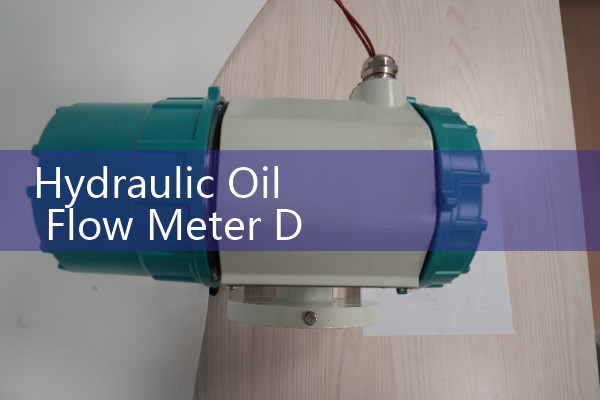
A strainer or filter with 100 mesh or finer is recommended. Hard particles in used hydraulic oil can damage the gear teeth. A magnetic filter before the meter catches ferrous wear debris from pumps and actuators. The same setup protects the meter and gives you a diagnostic signal about oil cleanliness.
Do not install the meter at the highest point of a pipe if air pockets can form. Air bubbles cause counting errors. Place the meter where the pipe always runs full of liquid. Horizontal mounting is standard, but vertical mounting with upward flow also works for DN100 units when the pipeline design demands it.
The local display on the Silver Instruments oval gear meter shows total volume, instantaneous flow rate, and diagnostic alarms. For hazardous areas, an ATEX Zone 1 version with intrinsic safety or flameproof housing is available. A recent order from a hydraulic press manufacturer in Thailand included eight DN100 meters with ATEX II 2G Ex db IIC T4 certification for a synthetic ester fluid line operating at 60 °C and 320 bar. The customer sent us pressure, temperature, fluid type and flow range, and we confirmed the meter model within one day.
FAQ
Q: What flow meter type works best for hydraulic oil in DN100 pipes?
A: Positive displacement oval gear meters give the most stable accuracy under viscosity changes. DN100 models cover flows from 20 to 180 m³/h with accuracy better than 0.5 % of rate. Turbine meters can work if viscosity stays constant, but hydraulic oil viscosity varies with temperature and oil age.
Q: How do I size a DN100 flow meter for high pressure hydraulic fluid?
A: Start with the maximum working pressure, fluid viscosity at operating temperature, and minimum and maximum flow rates. Match the meter body material and seal to the pressure class. A 420 bar hydraulic line needs a stainless steel meter with FKM seals. Provide us bar, DN, °C and flash point, and Silver Automation Instruments will size the meter and confirm the pressure drop.
Q: What is the typical accuracy of an oval gear meter for hydraulic oil?
A: Standard accuracy is 0.5 % of reading over a 10:1 turndown ratio. With pulse interpolation, 0.2 % of rate is achievable on DN100 meters. Repeatability is usually 0.05 % or better, which matters for test bench hydraulic power measurements.
Q: Can the flow meter handle pressures up to 350 bar?
A: Yes. High-pressure DN100 oval gear meters with 316L body and reinforced shafts are rated for 420 bar continuous duty. Test certificates up to 600 bar are available. Always confirm the flange rating matches the pipe specification, typically ANSI 600 or PN 400 for such pressures.
Q: Do I need straight pipe runs for a hydraulic oil flow meter DN100?
A: No straight pipe run is required for an oval gear meter. You can mount it directly after elbows, valves, or reducers. This makes compact and cost-effective installation on hydraulic skids possible, unlike turbine or vortex meters that often need 10D to 15D upstream straight piping.
 Hot News
 Related AD