

『Drag Force Flow Meter: Impact Target Deflection Fluid Sensor Sizing Principles』Related information(flow rotameter|digital flow meter|balo meter|hydraulic flow meter|volumetric meter|positive displacement meter|pitot tube flow meter|displacement meter|cfm meter|variable area flow meter|inline flow meter|differential pressure flow meter|calibrated flow meter|velocity meter|paddle wheel flow meter|oval gear flow meter|anemometer hvac|multiphase flow meter|doppler flow meter|thorpe tube flowmeter|heat flow meter)
Drag Force Flow Meter: Impact Target Deflection Fluid Sensor Sizing Principles
Quick Answer: A drag force flow meter uses a fixed target in the flow stream. Fluid hits the target and creates a deflection or strain. The measured force scales with the square of flow velocity. Sizing requires pipe diameter, target diameter, density, viscosity, pressure, temperature, and flow range. Send us these values and we will return a target flow meter quote for your application.
How a Drag Force Flow Meter Works
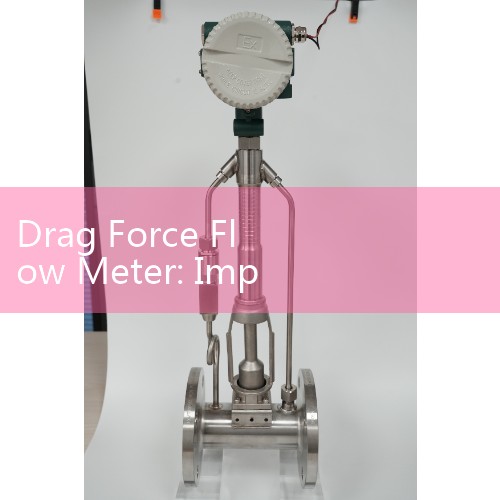
A drag force flow meter is often called a target flow meter or an impact target deflection flow sensor. The sensing element is a disc or a plate mounted at right angles to the flow. The fluid hits this target. A strain gauge or a force transducer measures the small deflection. The force on the target depends on fluid momentum. For a given target area and density, the force rises with velocity squared. The transmitter converts that force into a linear 4-20 mA HART signal or a digital output.
In practice, most engineers choose this meter for fluids that upset other devices. Coriolis meters can handle many tough fluids but they cost more on large lines. Magnetic flow meters only work with conductive liquids. Vortex meters can struggle at low flow and with high viscosity. A target flow meter has a simple flow path. The target can be changed for different flow ranges without replacing the whole meter body.
Silver Automation Instruments supplies drag force flow meters from DN15 to DN300. The standard target is 316L stainless steel. We also offer Hastelloy C, Monel, and PTFE coated targets. Process connections include wafer, flanged, and threaded. Output options include 4-20 mA HART, pulse, and Modbus RTU.
Sizing Principles for Target Deflection Flow Meters
Flow range comes first. In a target flow meter, the force on the target is small at low flow. If you size the target too large, the signal will be weak in the lower 10 percent of the range. If you size the target too small, you get a strong signal but high permanent pressure loss. We size the target diameter so the force falls between 30 percent and 90 percent of the load cell full scale at normal flow. The target diameter divided by pipe inner diameter is the beta ratio. A beta ratio of 0.6 to 0.8 works well for most liquids. For gas and steam, we often use 0.4 to 0.6 because the density is lower and the force is smaller.
High viscosity changes the Reynolds number. At high viscosity, the flow stays laminar. The target still sees a drag force. This is why a target meter can measure polymer melts, heavy fuel oil, and resins. A customer in Vietnam ran a paint production line. Their magnetic flow meter failed because the resin was non-conductive. We supplied a DN40 target flow meter with a 316L target and a 4-20 mA HART transmitter. The fluid ran at 120 °C and 30 cP. The meter read stable for 18 months without cleaning. The target disc had no small gaps to clog.
Density and viscosity data are not optional. The force calculation uses density directly. A meter sized for diesel at 0.83 kg/L will read differently on heavy fuel oil at 0.98 kg/L. So the target flow meter must be calibrated for the actual fluid density. If the fluid density changes a lot, we can set up a density correction in the transmitter. Most sites keep the density band narrow enough to ignore.
Temperature and pressure set the mechanical limits. A standard target flow meter body handles 150 °C and 40 bar. For steam at 250 °C, we use a high temperature load cell and a cooling fin. For hydrogen service at 100 bar, we use a thicker target and a welded stainless steel body. Do not assume the process temperature is the only temperature. Pressure drops across the target can cause local cooling in gas service. In most liquid lines, this is not a problem.
Installation and Straight Run
Most engineers skip this part. Then they get strange readings and blame the meter. A target flow meter needs straight pipe upstream and downstream. We recommend 10D upstream and 5D downstream as a minimum. If the meter sits after a control valve or a pump, increase to 20D upstream. The target mus
Common Applications
Oil and gas terminals in the Middle East use target flow meters for heavy fuel oil transfer. A typical line is DN80 at 60 m3/h, 120 °C, and 50 cP. The target flow meter replaces a positive displacement meter because it has no gears to wear. Wastewater plants in Australia use them on lime slurry and sludge. A DN100 target meter with a PTFE coated target handles 8 percent solids without clogging. Food and beverage plants use sanitary target meters for chocolate, syrup, and tomato paste. The tri-clamp connection allows quick removal for cleaning.
Seawater desalination plants often need a meter for brine transfer. The brine is corrosive and has a high specific gravity. We recommend a DN50 target flow meter with a 316L target and a PTFE lined body. This meter sends a 4-20 mA HART signal to the control room.
Turndown and Accuracy
A well sized target flow meter gives a turndown of 10:1 to 15:1. Accuracy is usually 1 percent of full scale. For custody transfer, this may not be enough. For process control and batching, it works well. The repeatability is strong. Once the target is calibrated, the readings stay stable for years. Because there are no moving parts, mechanical wear is low.
Do not use a target meter for a flow range below 0.1 m/s in liquids. The force is too small and the signal becomes noisy. In gas flow below 1 m/s, choose a thermal mass flow meter instead. We have seen this on customer sites many times. A target meter is not the right tool for a slow ventilation air line.
Recommended Models and Sizing Inputs
Silver Instruments target flow meter models cover small and large lines. For a DN15 to DN50 liquid line at 20 to 4000 kg/h, we often quote model SI-TF15 to SI-TF50 with a 4-20 mA HART transmitter. For a DN80 to DN200 gas line at 100 to 8000 kg/h, we use model SI-TF80 to SI-TF200 with a high temperature load cell. For slurry or corrosive service, the target disc gets a PTFE coating and the body can be lined with PFA.
FAQ: Drag Force Flow Meter Sizing
What is a drag force flow meter? A drag force flow meter uses a fixed target in the flow path. Fluid hits the target and creates a force. The force sensor converts that force into a flow signal. This type of meter is also called a target flow meter.
What is the typical turndown ratio of a target flow meter? Most target flow meters offer a turndown of 10:1 to 15:1. The upper limit depends on the load cell range and the target size. The lower limit is set by signal noise.
Which industries use impact target deflection flow sensors? Oil and gas, wastewater, chemicals, food and beverage, and marine. Common fluids include heavy fuel oil, sludge, lime slurry, resins, chocolate, and brine.
How do you size a target flow meter for high viscosity fluid? Start with pipe size and flow rate. Then provide the fluid viscosity in cP and density in kg/m3. We select a small beta ratio target to keep the Reynolds number in a stable range. The force calculation is corrected for laminar flow.
Can target flow meters handle solids or slurry? Yes. The target has no small gaps or moving parts. This is why target meters work on sludge, lime slurry, and other dirty fluids. Use a PTFE coated target if the slurry is abrasive.
Get a Quote from Silver Automation Instruments
We supply drag force flow meters for industrial users in Australia, Southeast Asia, Latin America, Africa, and the Middle East. Our team sizes the meter for your application before quoting. Send us your pressure (bar), temperature (°C), pipe size (DN), and flow range. Also include the fluid name, density, and viscosity if you have it. We will return a quote with model number, target material, beta ratio, and lead time.
Tel: +86-25-68650347
Whatsapp: +86-25-52155837
WeChat: +86 15365082610
Website: flow-meter.com.au
 Hot Product
 Related AD